.svg)
.svg)
Retail Stablecoin Use Surges 10x in 2025
.svg)
Orbital’s Q4 Stablecoin Retail Payments Index snapshot, in partnership with Artemis, shows the number of retail-sized stablecoin transactions increased from 314 million in January to 3.2 billion in December
LONDON, TALLINN and GIBRALTAR – 3 February, 2026 – Orbital, a global payment orchestration platform across stablecoins and traditional payment rails, today released its Q4 Stablecoin Retail Payments Index Snapshot. With data sourced from Artemis, the Index reveals that stablecoin use for smaller, retail-sized transactions under $10,000, has increased more than tenfold across 2025.
The Index tracks both the pace and quality of adoption across retail stablecoin payments, offering one of the most comprehensive snapshots of the sector’s evolution. The Q4 snapshot also includes a new section exploring exchange stablecoin flows, which reinforces the emerging specialisation of stablecoins.
Key findings include:
Use cases emerge for specific stablecoins
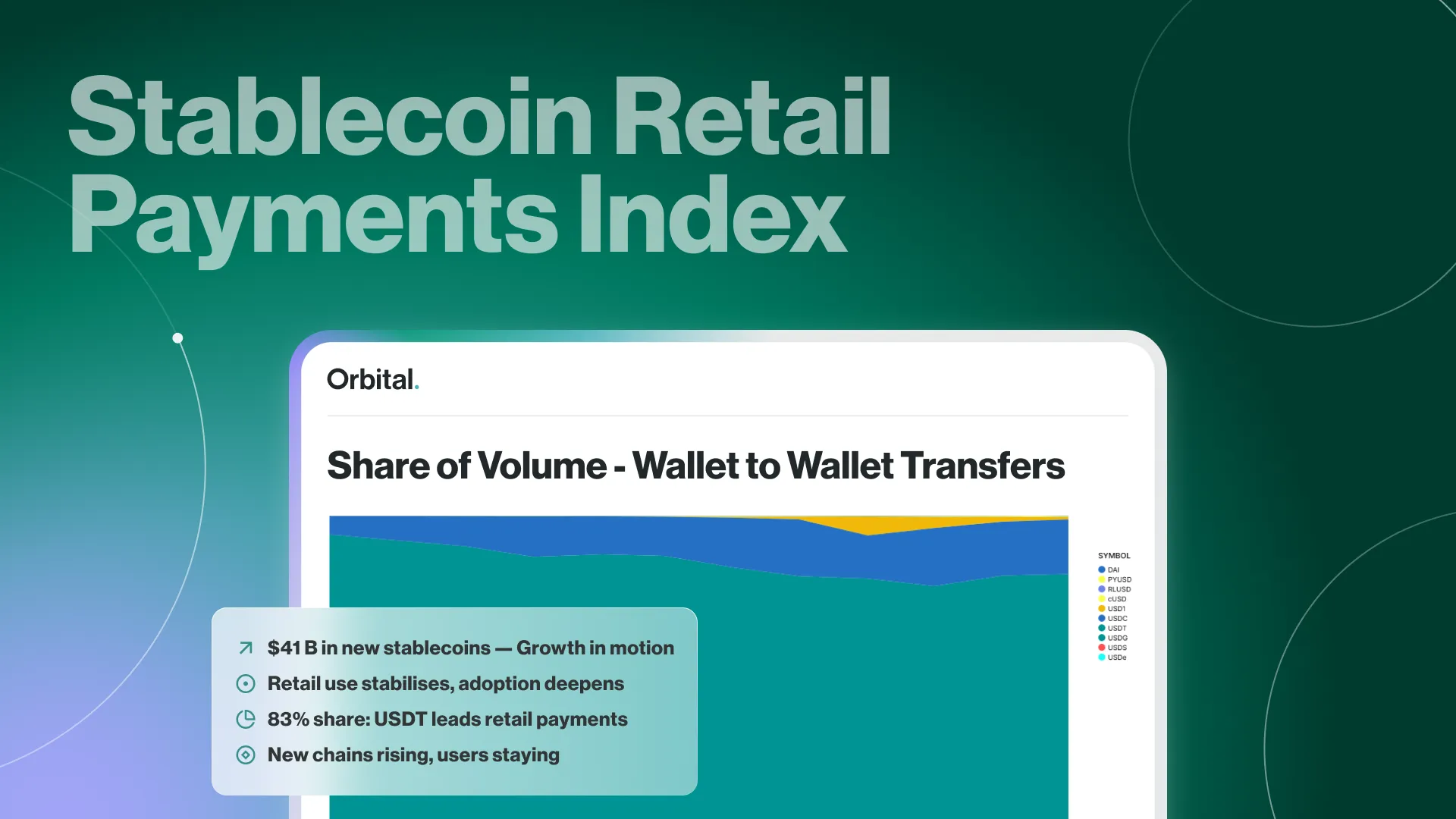
73% of retail-sized transactions, under $10,000, are made using USDT. The number of daily active users doubled in 2025, from 1.3m to 2.6m. These users are not only holding USDT, they are actively using it for transactions. USDC, meanwhile, has a lower share of transactions, but dominates high-value transactions, suggesting it has a more institutional role.
Supply growth slows, while transactions increase
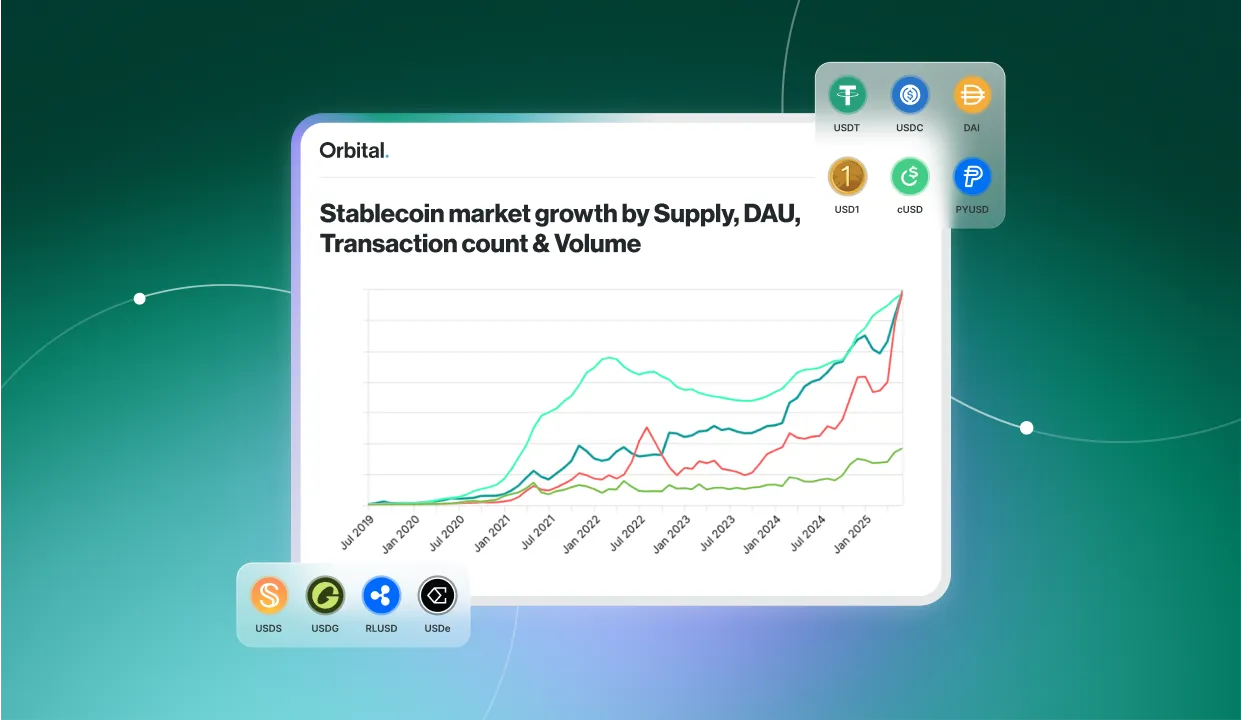
Stablecoin supply growth slowed to just 1.3% in December. Transaction growth across 2025 was up over 105%, more than double the growth of supply (48%). Each dollar of supply supported more payments activity, signalling a move towards utility over speculation.
Exchange use creates market segmentation
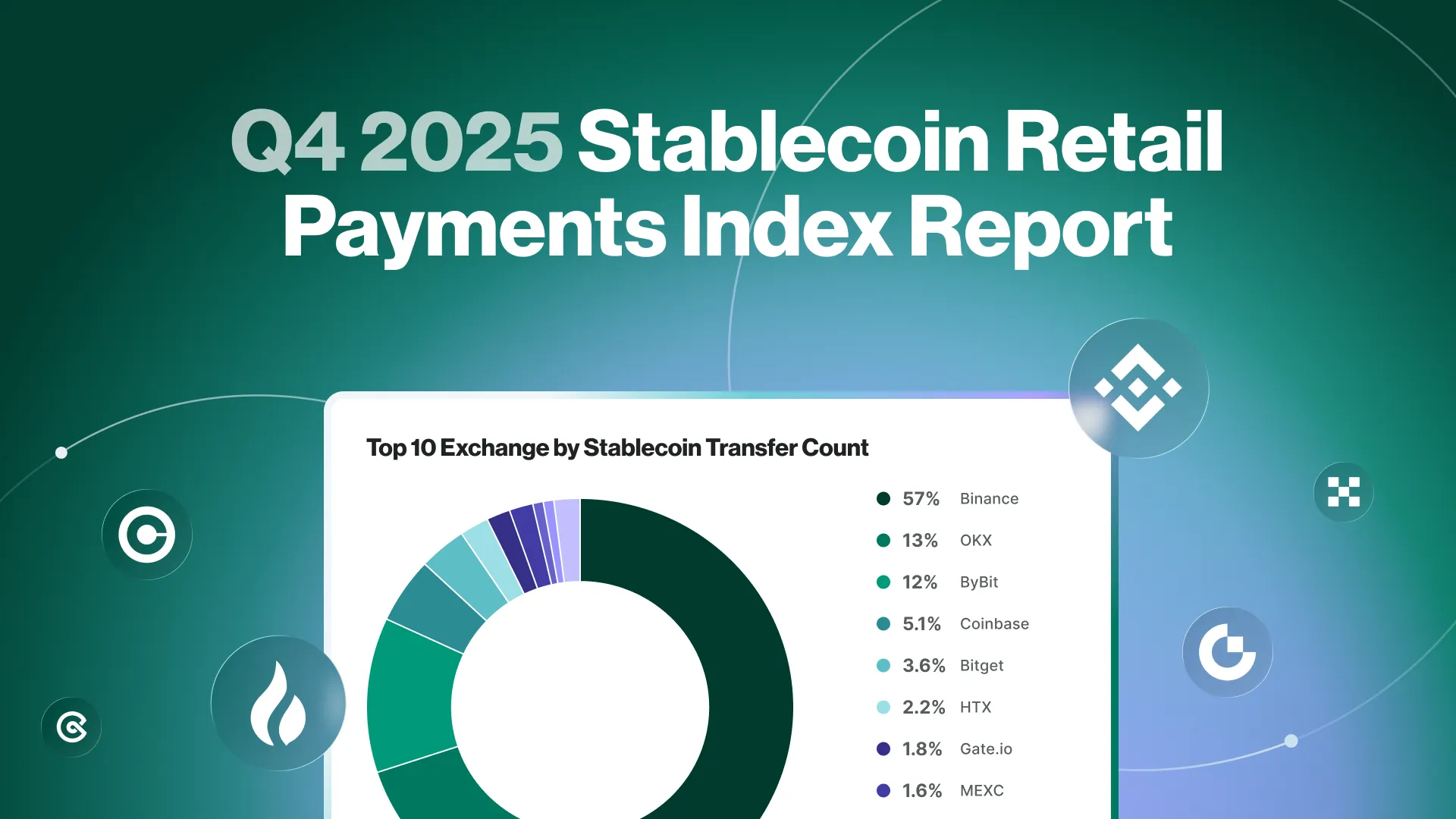
New analysis of payment origination data suggests that approximately two-thirds of consumer-to-merchant stablecoin payments originate from exchange-linked accounts, rather than self-hosted wallets. As a result, exchange withdrawal routes and default network options can materially shape the technical requirements for merchant acceptance.
Observed exchange infrastructure strategies now suggest three distinct categories affecting payment liquidity: Binance (BSC), HTX (Tron) and Coinbase (Base) are frequently observed to prioritise their proprietary Layer-2s/sidechains; Bybit, Bitget, and Gate.io are observed supporting a broader spectrum of chains with comparatively neutral routing across multiple networks; OKX is observed offering a more limited set of rival exchange-affiliated chains (BSC/Base), encouraging users onto neutral rails like Tron or Ethereum.
This result points to market segmentation based on where exchanges are primarily used. A clear divide exists in asset and network preference based on the exchange’s primary geography. In emerging markets, where Binance, OKX, and HTX are widely used, users tend to gravitate toward USDT on low-cost, high-velocity rails like Tron and BSC. In developed markets, where Coinbase and Crypto.com are widely used, users show a stronger preference for USDC and "institutional-grade" networks such as Ethereum, Solana, Polygon, and Base.
A shifting blockchain landscape
2025 saw big changes in the blockchains used. Aptos increased its share to 22% of the market by Q4, while Binance’s BNB Smart Chain (BSC) remained the largest network by share (35%) with high volatility followed by stabilisation. Plasma, however, saw a 66% drop in activity post-launch.
Traditional L2 chains Arbitrum, Polygon and Optimism saw their combined market share shrink from around 20% to closer to 10% over 2025, reflecting a relative shift in network mix within the Index coverage set. These shifts may be influenced by a range of factors, including changes in fee conditions and broader ecosystem activity.
Stablecoins as a parallel currency
Analysis of retail premiums can help highlight markets where stablecoins serve as critical economic rails, rather than standard settlement tools. Persistently elevated premiums may indicate stablecoin use as a de facto parallel currency for some users.
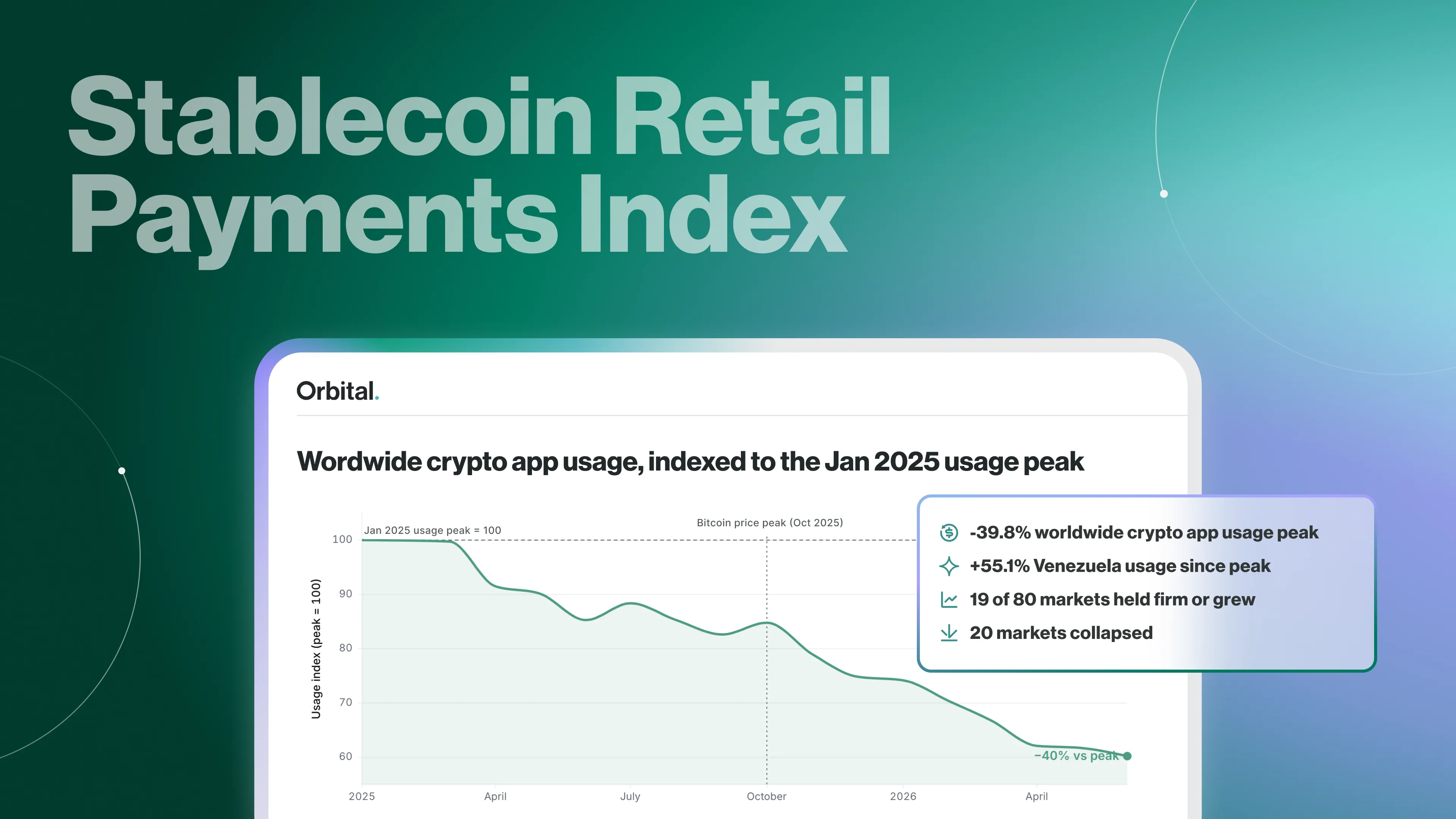
Algeria (97%), Bolivia (71%), and Venezuela (41%) remained extreme outliers in this metric throughout Q4. These sustained premiums are consistent with macro conditions such as capital controls and sharp currency depreciation, which can increase reliance on USD-linked instruments like stablecoins for payments, effectively creating a parallel financial channel.A link to the full Q4 2025 Stablecoin Retail Payments Index, with more details of these and wider 2025 insights, can be found here.
-ENDS-
Important: The Stablecoin Retail Payments Index and Report is produced by Pay Perform Technologies Ltd. The views and information shared here are for general informational purposes only and do not constitute financial, investment, legal, or other professional advice. No representations or warranties are made as to the accuracy, reliability, completeness, or timeliness of the data or content provided. The analysis is based on publicly available blockchain and third-party data, subject to known limitations, assumptions, and estimation methods including but not limited as outlined in the Methodology & Limitations section. Readers should conduct their own due diligence and consult with a qualified advisor before making any financial decisions. Mentions of specific digital assets, protocols, or platforms are for analytical purposes only and do not constitute endorsements or evaluations of their quality, stability, legality, or regulatory status. Orbital does not recommend buying, selling, or holding any particular digital asset and makes no representations regarding the suitability of any such asset for any use.
Orbital is the trading name representing the Pay Perform group of traditional financial and digital asset service providers. Regulatory status of Orbital’s services differs per jurisdiction, and you may not be protected by government or regulatory protection schemes. Please see Legal Disclosures for more information or reach out to us at: hello@getorbital.com.
About Orbital group
Orbital group is an award-winning global payment orchestration platform specialised in delivering secure, seamless and compliant stablecoin and traditional payments for enterprises. It equips B2B and B2C businesses with an all-in-one platform that offers named vIBANs, stablecoin wallets, and the ability to pay-in, payout, and exchange across all major stablecoins, traditional currencies, and over 80 exotic currencies interchangeably.
Founded in 2017, Orbital is the trading name representing the group of traditional financial and digital asset service providers: Pay Perform Limited - a Financial Conduct Authority authorised payment institution, Pay Perform (Gibraltar) Limited - an e-money issuer permissioned by the Gibraltar Financial Services Commission, Pay Perform Digital Limited a distributed ledger technology provider authorised by the Gibraltar Financial Services Commission, Pay Perform OÜ a virtual currency service provider authorised by Republic of Estonia Financial Intelligence Unit and Pay Perform Switzerland GmbH a member of VQF SRO, an officially recognised self-regulatory organisation (SRO) according to the Swiss Anti-Money Laundering Act.Orbital’s multi-jurisdictional licensing framework, combined with compliance with international security standards including SOC 2 Type 2, ISO 27001:2022, CSA TPC, and Cyber Essentials Plus, enables the platform to seamlessly unify both stablecoin and traditional currency payments on a global scale.
Methodology & Limitations
The Index is based on analysis of public blockchain transaction data. Our methodology includes filters designed to isolate smaller, wallet-to-wallet transfers under $10,000, which we use as a proxy for “retail” or consumer-scale payments. The report does not capture off-chain transactions or private transfers, and should be considered directional rather than comprehensive.
Important: The views and information shared here are for general informational purposes only and do not constitute financial, investment, legal, or other professional advice. No representations or warranties are made as to the accuracy, reliability, completeness, or timeliness of the data or content provided. The analysis is based on publicly available blockchain and third-party data, subject to known limitations, assumptions, and estimation methods including but not limited as outlined in the Methodology & Limitations section. Readers should conduct their own due diligence and consult with a qualified advisor before making any financial decisions. Mentions of specific digital assets, protocols, or platforms are for analytical purposes only and do not constitute endorsements or evaluations of their quality, stability, legality, or regulatory status. Orbital does not recommend buying, selling, or holding any particular digital asset and makes no representations regarding the suitability of any such asset for any use.
Methodology & Limitations: This Index is based on analysis of public blockchain transaction data. Our methodology includes filters designed to isolate smaller, wallet-to-wallet transfers under $10,000, which we use as a proxy for “retail” or consumer-scale payments. This threshold is an analytical assumption; while it helps remove larger institutional or speculative trades, it does not guarantee that all included transactions are truly consumer payments. Similarly, wallet activity is inferred using best-effort heuristics, which may result in some misclassification. Blockchain data is inherently pseudonymous and incomplete. This report does not capture off-chain transactions or private transfers, and should be considered directional rather than comprehensive.
Related articles
.avif)
.webp)







.avif)