


Built-in compliance, robust licensing
Compliance isn’t an afterthought—it’s the foundation for everything we do.
Our compliance technology is grounded in years of financial best practice. It’s embedded at every layer of the platform—from granular access controls to automated transaction monitoring.
Achieved SOC 2 Type 2 report compliant report and ISO 27001 certification.
Our compliance technology is grounded in years of financial best practice. It’s embedded at every layer of the platform—from granular access controls to automated transaction monitoring.
Achieved SOC 2 Type 2 report compliant report and ISO 27001 certification.





Protocols
Enterprise-grade security
Robust fraud prevention and user control protocols, supported by SOC 2 Type 2 report, ISO 27001:2022 certification, CSA Trusted Cloud Provider status, and Cyber Essentials Plus certification.

Licensing
Globally licensed, locally connected
Orbital holds licenses across multiple jurisdictions
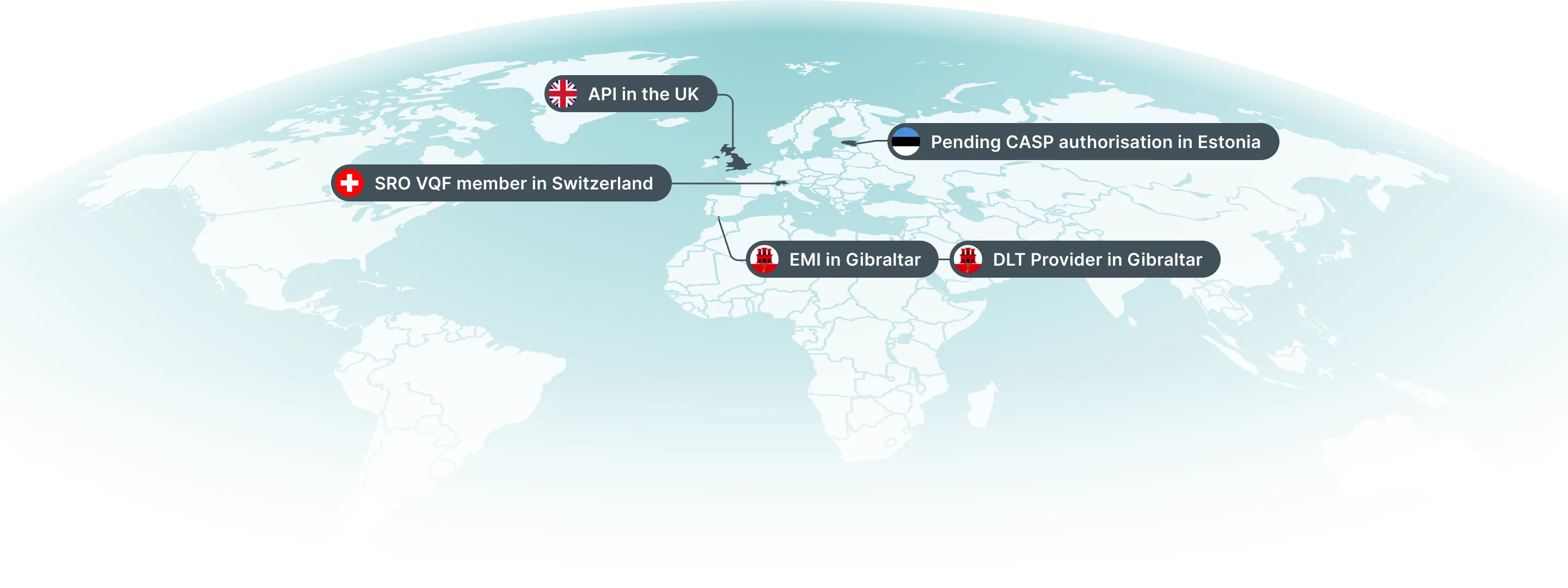

This regulatory foundation enables compliant transactions across both traditional payment rails and stablecoins.
Payment

security
Transaction monitoring technology at its core
At Orbital, traditional and crypto transfers run through a rigorous transaction monitoring process – split into real-time and retrospective activities.


Screening & rule analysis
All transfers experience screening and transaction monitoring rules; whilst crypto transfers also experience blockchain and travel rule information transmission and analysis.
Decision engine
These processes feed into Orbital’s Transaction Decision Engine, which determines whether to approve, refer, or reject/refund each transfer.

Risk-based monitoring
Transaction monitoring is risk-based and tailored, with increased scrutiny applied to clients/transactions with higher risk profiles.


technology partners
Best-in-class compliance technology
Orbital integrates with industry-leading compliance and risk intelligence technology. These partners enable the implementation of Orbital's strong compliance frameworks; allowing performance of advanced KYC, sanction screening, transaction monitoring, Travel Rule, ID&V and other AML processes.
This supports regulatory adherence and strengthens our safeguards against financial crime.

Compliance & transaction monitoring
Built for control —designed
for trust
We’ve built a Compliance Programme grounded in traditional financial service best practices, enhanced by innovative compliance technology.
Transaction orchestration, compliance enforcement, auditing, and highly automated system workflows have been built for precision — allowing us to support the evolving regulatory landscape, and deliver client-specific solutions at speed, without compromise.

Compliance highlights
Compliance embedded
Enhanced controls & future-proof architecture

Security-first infrastructure
Authentication, encryption protection at every layer

Precision access control
Granular permissions per product for real-time operational integrity

FAQ
Have any questions?
Want to know more?
Get in touch with our team
Why does the legal entity behind a payment service matter?
What should businesses check when assessing a stablecoin payment provider?
What is the difference between a licensed and registered payment provider?
What is the Travel Rule?
How does Orbital apply the Travel Rule?
What is KYB?
Why are stablecoin transactions subject to additional compliance considerations?
Get

started
Join us as we redefine global payments
Simplify payments. Scale your business. Transform how you move money.


Resources & Support
Resources & Support
NB! Information provided on this website is intended to inform eligible corporate customers about Orbital’s services and does not constitute financial or investment advice. The availability of services and supported assets differs depending on the customer’s jurisdiction, the relevant Orbital service provider and applicable regulatory requirements. References to particular crypto-assets or services on this website do not constitute an offer of such services where their provision would be prohibited or would require authorisation not held by the relevant service provider. Crypto-asset services offered to customers in the European Union are subject to Regulation (EU) 2023/1114 (MiCAR). USDT and other non-MiCAR-compliant e-money tokens are not supported for crypto-asset services offered to EU customers by Orbital’s EU-regulated service providers.
Orbital is the trading name representing the Pay Perform group of traditional financial and digital asset service providers. Regulatory status of Orbital’s services differs per jurisdiction, and you may not be protected by government or regulatory protection schemes. Please see Legal Disclosures for more information or reach out to us at: hello@getorbital.com
Subscribe to receive the latest digital asset retail payment trends report