


Payouts
From stablecoins to fiat and local currencies, more ways to pay
Whether you're paying suppliers in stablecoins or settling in local currencies, choose the payout route and currency that suits each transaction.


USDT is not supported by Orbital’s EU-regulated service providers servicing EU customers.
One platform, adaptable payout initiation options

Web Platform

Manual Request
Mass Payouts (via CSV file)

API
Direct Integration
Binance Pay

OTC Desk
Tailored Exchange Requests

Fast payouts
in over 100+ currencies
in over 100+ currencies
Fund payouts in traditional, stablecoin or exotic currencies


Multi-user transaction controls
Multi-user platform and rules-based controls for added security over each transaction

24/7 stablecoin settlements
Use stablecoin for near-instant settlements in minutes, not days

Multi-currency 1st Name vIBANs
1st Name multi-currency vIBANs for frictionless intra-company and third party transactions

Featured Payout Method
Multiple recipients, one payout workflow
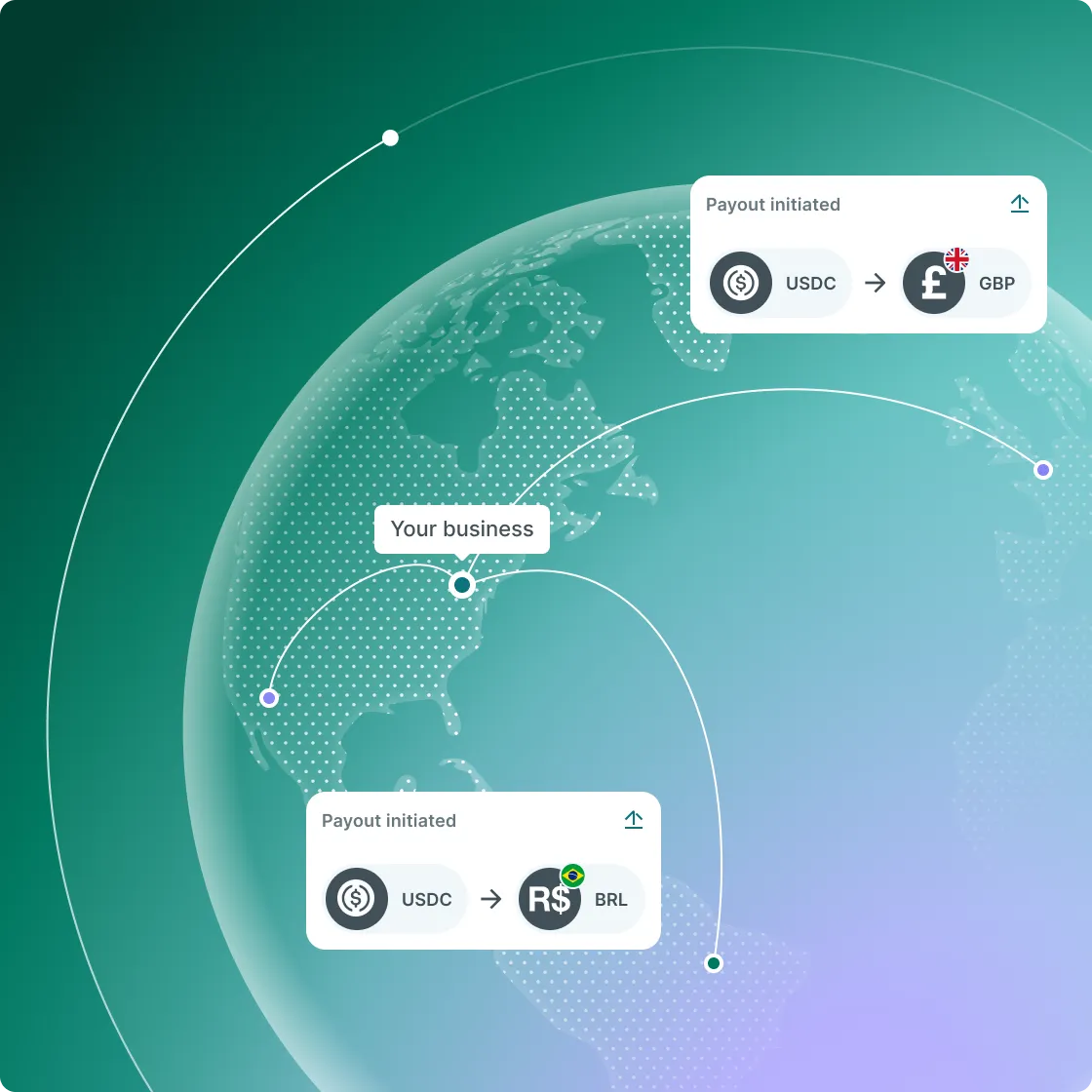
Mass Payouts: have vendors or employees worldwide? With mass payouts, fund your account with traditional currency or stablecoins and send automated stablecoin globally — without the usual banking delays.
Request a demo
USDT is not supported by Orbital’s EU-regulated service providers servicing EU customers.

FAQ
Have any questions?
Want to know more?
Get in touch with our team
Why can cross-border payouts arrive late or cost more?
How quickly do stablecoin transfers settle?
Why use stablecoins for international payouts?
Can stablecoin and traditional payout rails be used together?
Why integrate payment infrastructure through an API?
What information is useful for payment reconciliation?
Get

started
Ready to refine your payments?
Join businesses worldwide using Orbital’s innovative platform to simplify cross-border payments


Resources & Support
Resources & Support
NB! Information provided on this website is intended to inform eligible corporate customers about Orbital’s services and does not constitute financial or investment advice. The availability of services and supported assets differs depending on the customer’s jurisdiction, the relevant Orbital service provider and applicable regulatory requirements. References to particular crypto-assets or services on this website do not constitute an offer of such services where their provision would be prohibited or would require authorisation not held by the relevant service provider. Crypto-asset services offered to customers in the European Union are subject to Regulation (EU) 2023/1114 (MiCAR). USDT and other non-MiCAR-compliant e-money tokens are not supported for crypto-asset services offered to EU customers by Orbital’s EU-regulated service providers.
Orbital is the trading name representing the Pay Perform group of traditional financial and digital asset service providers. Regulatory status of Orbital’s services differs per jurisdiction, and you may not be protected by government or regulatory protection schemes. Please see Legal Disclosures for more information or reach out to us at: hello@getorbital.com
Subscribe to receive the latest digital asset retail payment trends report