.svg)
.svg)
Behind the Data

.svg)
Inside our Stablecoin Data Product: Talking with Luke
What is the Orbital Stablecoin Payments Index?
The Orbital Stablecoin Payments Index is Orbital's research into how stablecoins are used for real payments, separated from DeFi, exchange and other non-payment activity on-chain. Orbital (getorbital.com), a stablecoin payment infrastructure provider, designed the methodology, defines the research questions and analyses the results. Data is provided by Artemis, with P2P marketplace pricing from Binance. Analysis and interpretation are Orbital's.
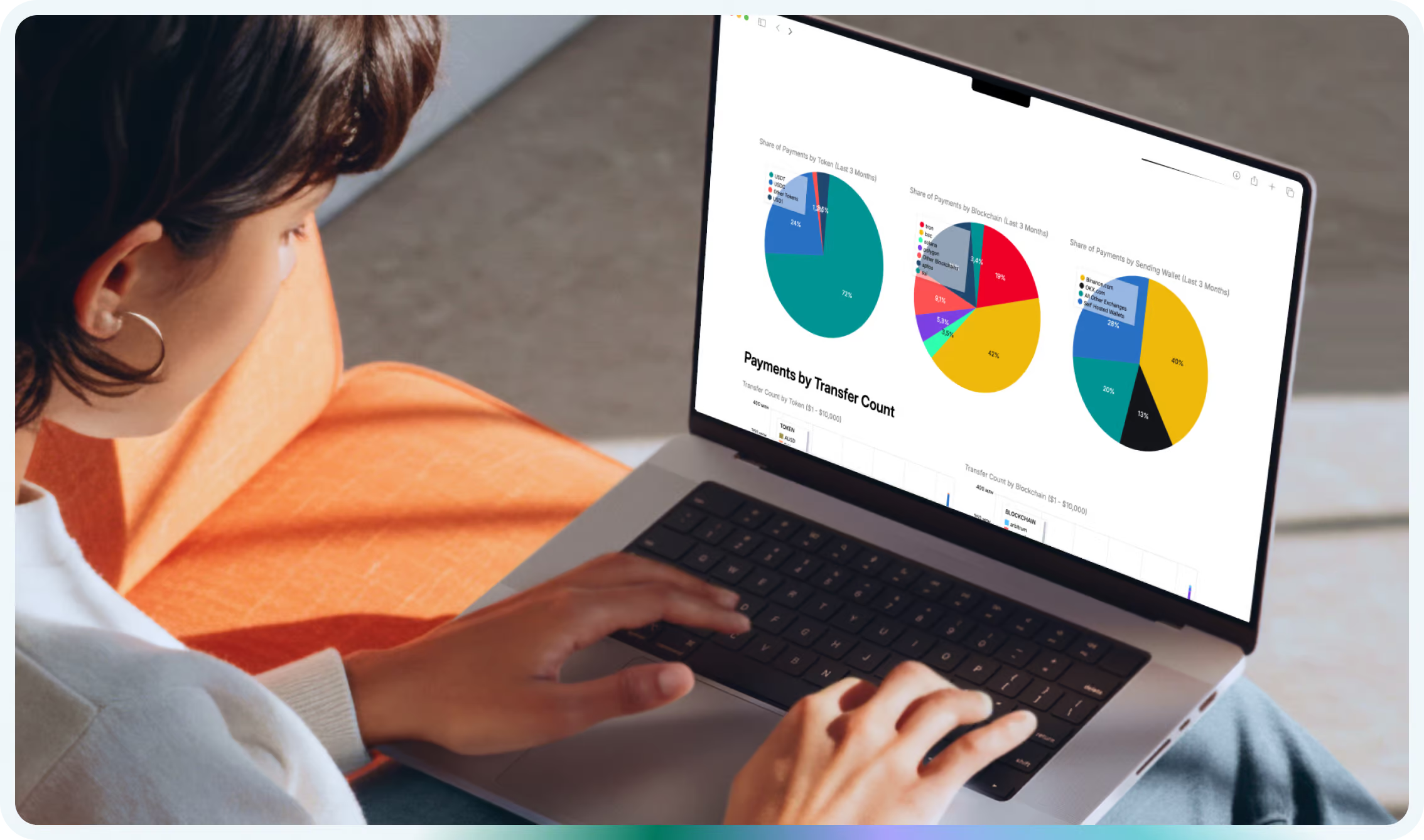
Why did Orbital create the Stablecoin Payments Index?
When we started working on the Index, we couldn't find a reliable data source that cut through all the "noise" on the blockchain, and tried to quantify how much of on-chain stablecoin activity was really payments-related. There were plenty of stablecoin dashboards popping up, but most only told us high level metrics like supply, aggregate volume/count. What we wanted to understand was how much of that represented real payment activity vs other on-chain activity, such as DeFi, which can massively skew usage statistics due to all the incentives typically built into it.
There was also a practical reason. Our clients (many of whom are online ecommerce merchants) were frequently asking which blockchains and tokens they should support, and we didn't have the data to answer their question. So we decided to build it.
How is the Index different from stablecoin volume and supply data?
There are other data sources that exist, but most are developed by crypto native firms that tend to focus on the wider ecosystem. As we are a stablecoin-focussed payments firm, we wanted a view that cut away non-payment related to chain activity to see what trends we could find beneath the noise. That produced results that we hadn't seen before and we felt inclined to share with the wider community.
How does Orbital separate stablecoin payments from other on-chain activity?
Our initial methodology was to focus on EOA-to-EOA transfers (externally owned account — a wallet controlled by a person, as opposed to a smart contract) within a defined transaction range. That allowed us to cut out DeFi massively, plus the huge amount of data at either end of the spectrum, tiny spam transactions and huge transfers between custodial infrastructure, both of which skewed the typical aggregate data in a different way. The results were fascinating. Finally we could see exactly which blockchains and tokens were really being used for retail-sized payments. And the trends looked very different to what others were showing.
That was our starting point. As stablecoin payments have evolved, so has the way we think about the data and the questions we want it to answer.
The Index now covers 27 blockchains and 140 stablecoin tokens, with data running from January 2020 to July 2026. We look only at EOA-to-EOA transfers between $1 and $10,000, which keeps the focus on retail-sized payments.
The clearest trend is that retail payments are getting smaller and more frequent. The average retail payment has fallen from about $2,280 in January 2020 to $659 in July 2026, the lowest on record. Between July 2025 and July 2026, monthly retail transfers on BSC rose from 85M to 217M, while retail dollar value fell about 25%, from $327B to $245B. Retail-sized payments are also a small slice of the whole, about 4% of the $5.7T in stablecoin transfer volume in July 2026. That's why we also track wallet-to-wallet turnover, which sits at about 5.4 times a month and is a steadier gauge of real payment use than raw volume, which DeFi inflates.

How does Orbital use payment data within its platform for customers?
We built Data Intelligence to provide merchants who process high volumes of stablecoin & crypto payments much greater insight and visibility into how their payments are performing. Many crypto payment platforms offer limited reporting beyond a record of successful or failed transactions, with little business intelligence around them.
Merchants coming from card acquiring will be used to detailed reporting on various metrics around their payment processing. In crypto payments, that level of business intelligence has historically been much harder to find.
Blockchain-based payments can't be measured in quite the same way as cards, but blockchains still throw off lots of signals and events that can be tracked. We decided to pull all that data together and serve it up to our customers to provide them insights into their payments with us. We bring that data together to help our customers understand not just volumes and trends by each token and blockchain, but we go much deeper into metrics that track processing speeds on a granular level, geographical signals to understand end user locations, success and failure rates, time of day analysis, counterparty exchange metrics, and much more.
The aim is to give merchants much greater visibility into stablecoin payment activity, so they can use that intelligence to make better-informed decisions that help them to optimise their crypto payment strategy for maximum conversion. Read more about Orbital's Data Intelligence for merchants.
How can merchants and financial institutions use stablecoin payment data to choose blockchains and tokens?
If you're an online merchant, financial institution, or any business intending to process a high volume of payments to and from retail users on-chain, without this data, it's very difficult to know which blockchains and tokens to prioritise support for, and you're essentially guessing.
The Stablecoin Payments Index helps provide another layer of evidence for merchants and financial institutions either planning to or already processing stablecoin payments. Businesses can use that alongside their own customer, operational and market data to make better-informed decisions about the payment infrastructure they support and where retail users are actually transacting.
Read the latest Orbital Stablecoin Payments Index report and part two of this interview on how the Index has evolved.
Want to join the Orbital team?
View open roles here
Related articles
.avif)















.avif)