



Part 2: The evolution of payments data
Interview with Co-Founder & Head of Corporate Development Luke Wingfield Digby
How has the Index evolved since we created it — and why will it continue to evolve?
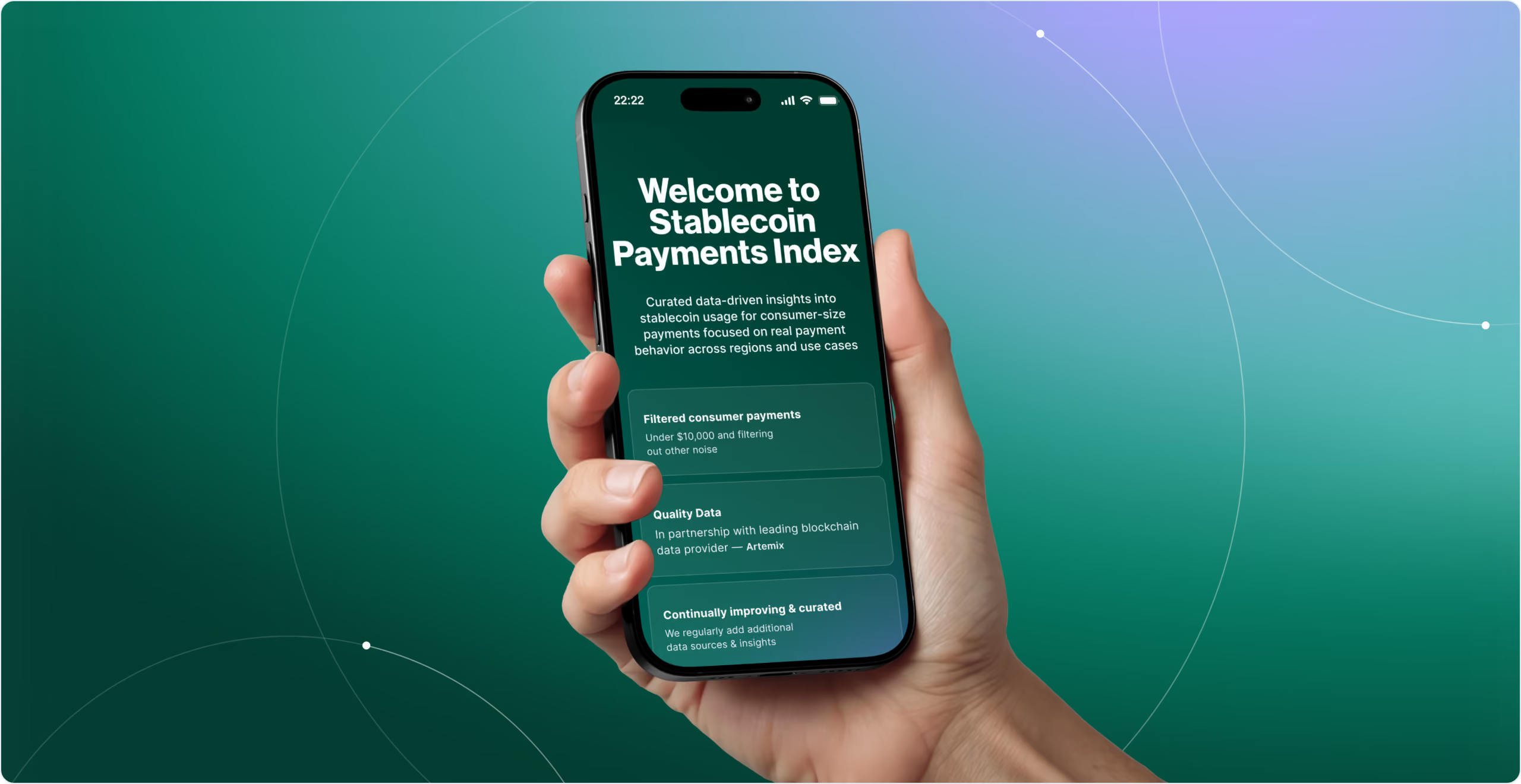
The Index started by looking at only retail-sized payments. Since then we've expanded and looked at other metrics related to stablecoins. Anything we could get data on that could be used to offer insights that we hadn't been able to find elsewhere. As the industry is maturing, more and more data is being generated, which provides us more signals about what's really going on. Finding and accessing the data is probably the biggest challenge. Once you have the data, denoising, slicing and interpreting it is the next challenge.
After the Payments view, we started asking ourselves in which markets did stablecoins trade at a premium. We knew people in emerging markets didn't buy stablecoins (or other crypto) for a price equivalent to what one might pay in the US or Europe, so we dug into that. Our data suggested that many users in emerging markets initially onramp into crypto and stablecoins via P2P marketplaces on platforms like Binance, so we decided to start collecting data around what people typically pay via those channels. The result was a map of which countries in the world users were paying the highest premiums to buy crypto.
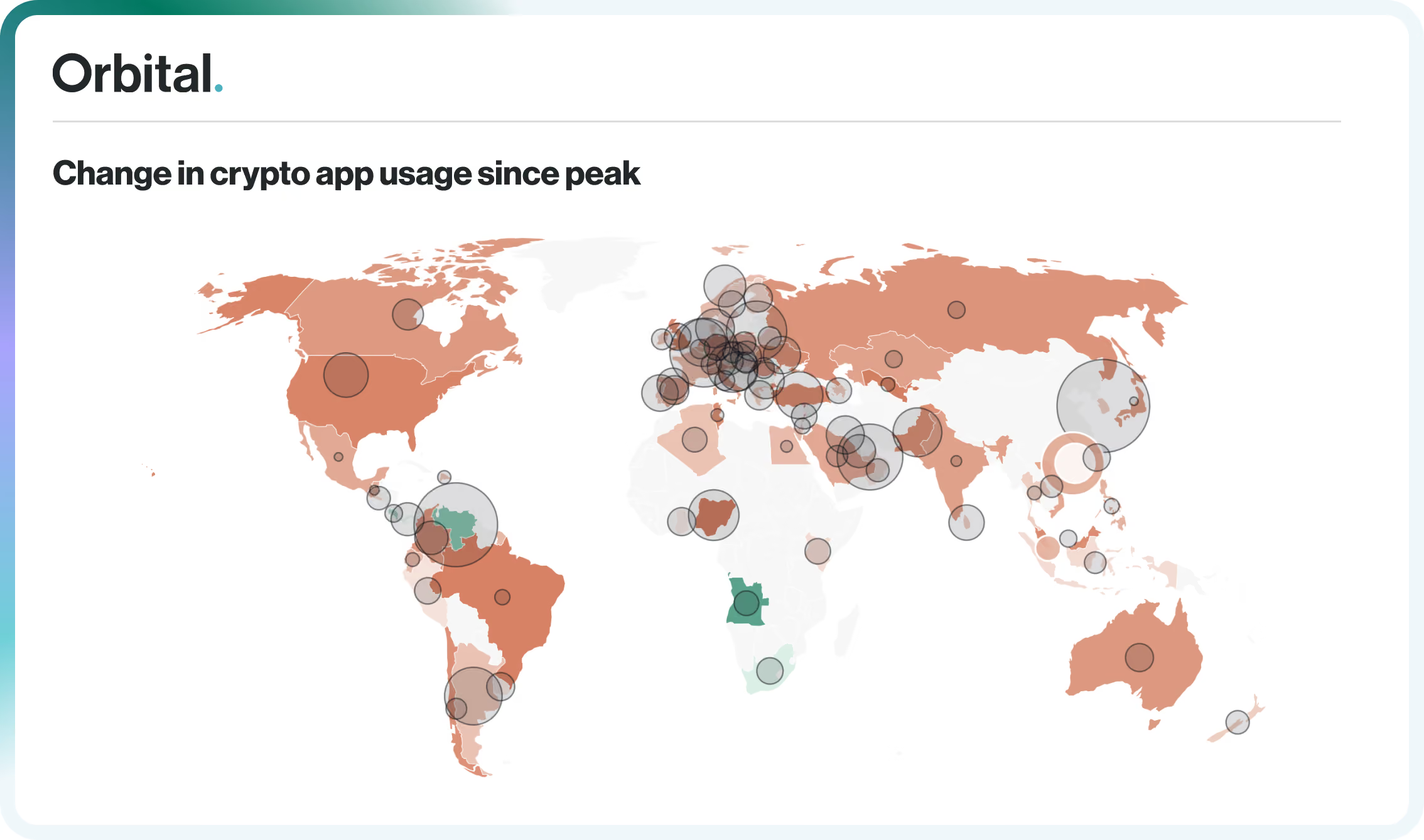
From there we wanted to dive deeper into the geographical element in more detail. Our customers frequently ask us in which countries crypto is most prevalent, or where they should direct their marketing to support their crypto payments, so we started looking for the signals. One thing we knew was that most users in emerging markets use a mobile device as their primary way of doing things online. So we worked with mobile app intelligence firm Sensor Tower to look at the data of where crypto was most actively being used relative to local internet enabled population sizes.
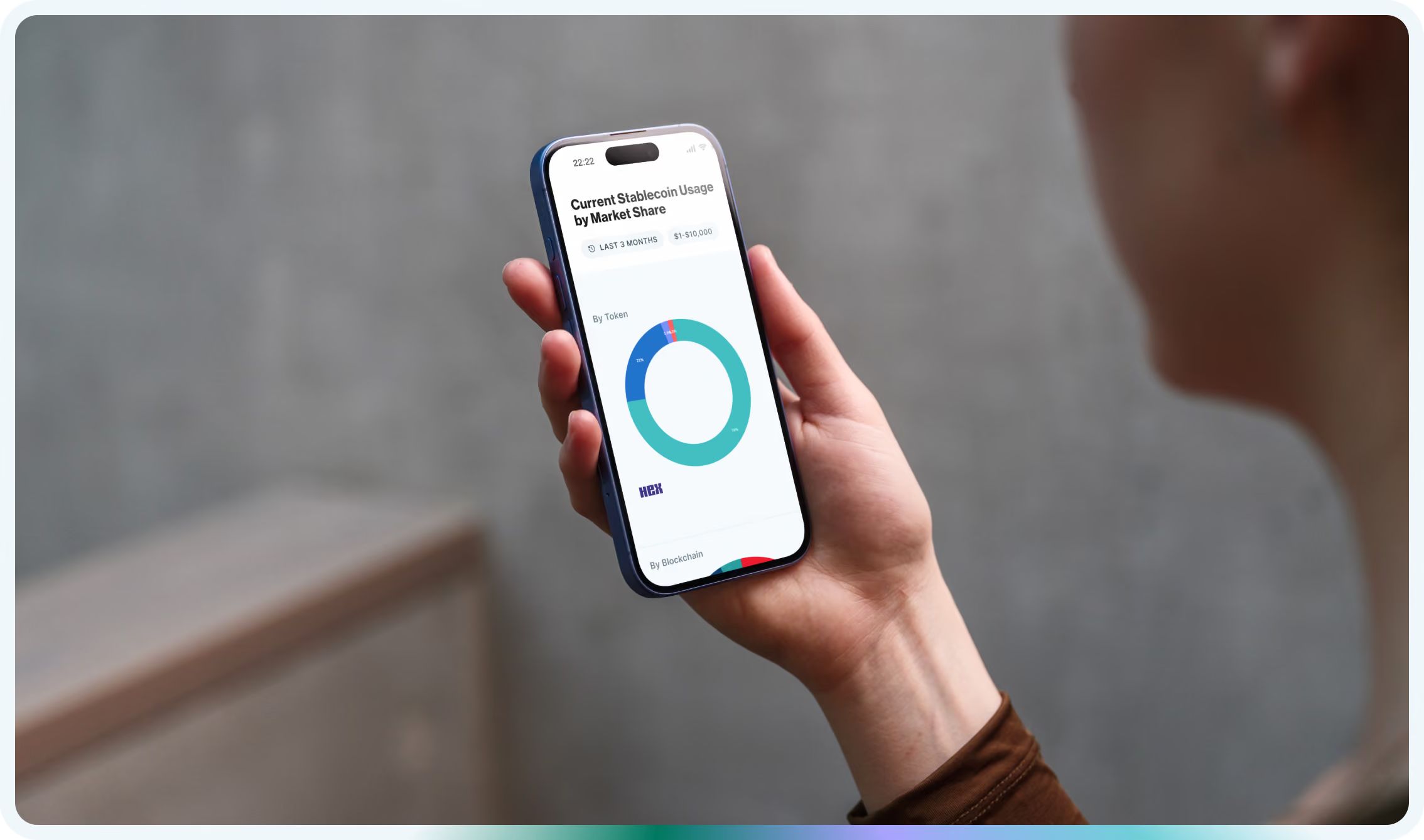
Another question that often came up from our customers was around exchanges. It was clear in our own data that many consumers pay online merchants from their account at a crypto exchange. So our clients wanted to understand which ones they should optimize for. That gave us another opportunity to expand the Index with our Exchange report which dives in and segments the number of stablecoin transfers in and out of the world's largest exchanges. The data helped us guide our merchants in terms of which blockchains and tokens to support based on which exchange their users were paying from. Small optimisations like this can have a measurable impact on payment conversion rates.
The next unanswered question was around the much hyped stablecoin sandwich. The whole industry couldn't stop talking about the efficiencies of the stablecoin sandwich, but we couldn't find anyone who had quantified what those efficiencies were, or in which corridors they actually existed. We set out to answer exactly that question in our upcoming corridor efficiency deep dive (6–7 October).
What goes into turning data into useful payments intelligence?
Interpreting data is not always an easy task. Especially when it comes to blockchains which throw out enormous amounts of data. Before you can try to derive insights you need to deeply understand the shape and quality of the data you're working with. Then you need to understand which parts are useful, and which parts are noise that needs to be filtered out. Once your data set has been cleaned up and reshaped, then you can start asking the right questions. A lot of the questions we ask are inspired by real life questions from our clients which we haven't been able to answer with verified data. In other cases, we're scratching our own itch and answering questions we were unable to find already answered elsewhere.
Why does methodology need to evolve?
Methodology needs to evolve with new understanding. Particularly when working with massive data sets that are impossible to review every row and record. The more you work with data the more edge cases and inaccuracies that you can discover, which all feed into tweaking and improving the methodology. This is a constant process and should never end.
What are we learning as the research gets deeper?
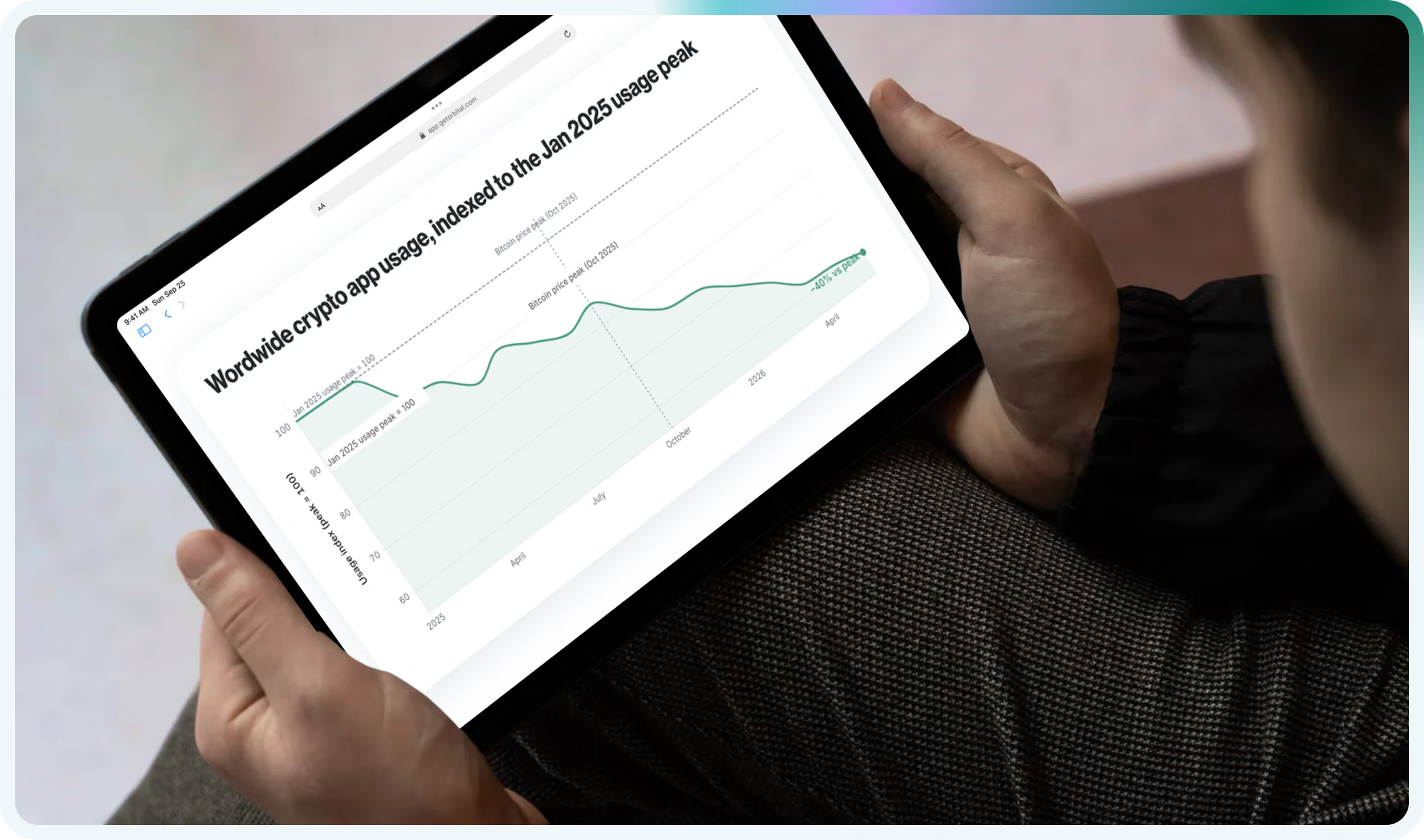
The research we do is mostly constrained by the data we have access to. Sourcing new data that can tell us a story or provide a signal is the biggest challenge. We started our journey by looking at only on-chain data, which told us a lot about how much of the total on-chain activity was actually payment related, and on which chains and tokens. To go deeper we needed new data sources. Each new data source we add brings with it a different dimension and new questions that can be asked of it.
Explore more in Orbital's Insights & Research section, and read part one of this interview Behind the Data on what the Index is and how it's built.
-ENDS-
Important: The views and information shared here are for general informational purposes only and do not constitute financial, investment, legal, or other professional advice. No representations or warranties are made as to the accuracy, reliability, completeness, or timeliness of the data or content provided. The analysis is based on publicly available blockchain and third-party data, subject to known limitations, assumptions, and estimation methods including but not limited as outlined in the Methodology & Limitations section. Readers should conduct their own due diligence and consult with a qualified advisor before making any financial decisions. Mentions of specific digital assets, protocols, or platforms are for analytical purposes only and do not constitute endorsements or evaluations of their quality, stability, legality, or regulatory status. Orbital does not recommend buying, selling, or holding any particular digital asset and makes no representations regarding the suitability of any such asset for any use.
Orbital is the trading name representing the Pay Perform group of traditional financial and digital asset service providers. Regulatory status of Orbital’s services differs per jurisdiction, and you may not be protected by government or regulatory protection schemes. Please see Legal Disclosures for more information or reach out to us at: hello@getorbital.com.
Discover the Latest Report
Related articles